Asana
Heart-Opening Yoga Poses for Beginners: Improve Heart Health Today
Most of a modern day is spent rounded forward — over a desk, a phone, a steering wheel. Heart-opening yoga poses (backbends and chest-openers, technically) do the opposite: they draw the chest and shoulders open, counter that forward collapse, and — practised regularly — support better posture, easier breathing, and a body that carries less tension through the chest and upper back. Here are six poses we teach to complete beginners, with the alignment cues and prop tips our teachers actually use in class.
Quick answer: the best heart-opening yoga poses for beginners
Cobra, Bridge, Camel, Fish, Puppy and Cow pose are the best heart-opening yoga poses for beginners — gentle backbends and chest-openers that counter forward-rounded posture from sitting, ease breathing, and can all be taken with props. Start with Cat-Cow and Puppy Pose to warm up, then build toward Cobra and Bridge before attempting the deeper Camel pose.
Swipe to see all columns
| Pose | Level | Focus |
|---|---|---|
| Cow Pose (Bitilasana) | Beginner | Gentlest entry, breath-led spinal movement |
| Puppy Pose (Uttana Shishosana) | Beginner | Gentle chest-opening warm-up |
| Cobra Pose (Bhujangasana) | Beginner | Back-muscle-led backbend |
| Bridge Pose (Setu Bandhasana) | Beginner | Supported chest & hip opener |
| Fish Pose (Matsyasana) | Beginner (restorative) | Passive, deeply relaxing chest release |
| Camel Pose (Ustrasana) | Intermediate | Deep chest opener — needs patience |
What Are Heart-Opening Poses (and Why They Matter for Heart Health)
In yoga, “heart-opening” poses are backbends and chest-expanding shapes that stretch the front of the body — chest, shoulders and the muscles between the ribs — while strengthening the muscles of the upper back that support good posture. They will not replace medical cardiac care, but the physical and breathing benefits are real: a more open chest allows fuller, easier breaths, and better posture reduces the chronic upper-body tension that builds up from hours of sitting.
The approach that matters most for beginners is not which pose you attempt — it is how you enter it. Every pose below can be taken gently with props, or deepened over time as your body opens. That is the alignment-based method founder Alpesh Patwari has taught since training under Usha Devi in Rishikesh in 2006: the shape should fit your body, never the other way around.
1. Cobra Pose (Bhujangasana)
The most accessible heart-opener there is, and the one to master before anything bigger. Lying face-down, press the tops of your feet and pubic bone into the mat, place your hands under your shoulders, and lift your chest using your back muscles first — let your arms only add the last small amount of lift.
- Cue: keep your elbows close to your ribs, not flared out
- Avoid: using your arms to force the lift — you should be able to hover your hands just off the mat
- Prop tip: if your lower back complains, lift less and focus on lengthening through the crown of the head instead
2. Bridge Pose (Setu Bandhasana)
A gentle, supported backbend that is often the very first heart-opener we teach. Lying on your back with knees bent and feet hip-width apart, press into your feet to lift your hips, rolling your shoulders underneath you and clasping your hands (or holding a block between your inner feet if that feels more stable).
- Cue: keep your knees tracking straight ahead, not splaying outward
- Prop tip: slide a block under your sacrum for a fully supported version you can hold for several restful minutes
3. Camel Pose (Ustrasana)
A deeper backbend best approached with patience — and exactly where props earn their keep. Kneeling with hips over knees, place your hands on your lower back for support, lift your chest, and only reach for your heels once your chest is genuinely leading the movement, not your neck.
The half-camel — one hand on your lower back, the other reaching toward one heel at a time — is a real pose, not a lesser version of it. Most beginners should stay here for months, not rush to the full expression.
— The alignment-first method taught at Alpesh Yoga
- Cue: lead with your chest and keep your neck long, rather than dropping your head back
- Avoid: reaching for your heels before your chest is fully open — that is what strains the lower back
- Prop tip: place a block on each shin near your ankle and rest your hands there instead of reaching all the way to your heels
4. Fish Pose (Matsyasana)
A passive, deeply restorative chest-opener that is ideal at the end of a practice. Lying on your back, slide your hands under your hips, press your forearms into the mat, and lift your chest while tilting your head gently back — or, far more comfortably for beginners, rest the crown of your head on a bolster or folded blanket instead.
- Cue: lift from the chest, not by cranking the neck backward
- Prop tip: a bolster placed lengthwise under your spine turns this into one of the most relaxing poses in the whole practice
5. Puppy Pose (Uttana Shishosana)
Cobra and camel’s gentler cousin — a chest-opening stretch with none of the backbend intensity, which makes it an excellent warm-up or a safe option on a tired day. From hands and knees, walk your hands forward and lower your chest toward the mat while keeping your hips stacked over your knees, letting your forehead or chin rest on the floor.
- Cue: keep your hips lifted directly over your knees rather than sinking back toward your heels
- Prop tip: rest your forehead on a folded blanket if it does not comfortably reach the floor
6. Cow Pose (Bitilasana)
The gentlest entry point of all, and where we start every beginner’s first heart-opening sequence. On hands and knees, inhale as you drop your belly, lift your chest and gaze slightly upward, letting the movement come from your whole spine rather than just your neck.
- Cue: move slowly, breathing with the movement — this is as much a breath practice as a stretch
- Pairs with: Cat Pose (rounding the spine on the exhale) for a warm-up flow before any of the poses above
A Simple Heart-Opening Sequence to Practice at Home
- Cat-Cow, 5–8 slow rounds, to warm up the spine
- Puppy Pose, held for 5 breaths
- Cobra Pose, 3 rounds, holding each for 3–5 breaths
- Bridge Pose, held for 5–8 breaths, supported with a block if you like
- Camel or half-camel, one round only while you are still building strength
- Fish Pose (supported on a bolster), held for 1–2 minutes to close
Always warm up before any backbend, and never force a deeper shape than your body offers that day — alignment matters far more than depth.
Who Should Be Careful With Backbends
Heart-openers are generally safe for healthy beginners, but go gently — or check with your doctor first — if you have a diagnosed heart condition, high or low blood pressure, a recent back or neck injury, or if you are pregnant (several of these poses need modification during pregnancy). None of this is medical advice; if in doubt, ask a doctor before you deepen any backbend practice.
Practice Heart-Openers With Us: Drop-In Classes in Arambol & Bhagsu
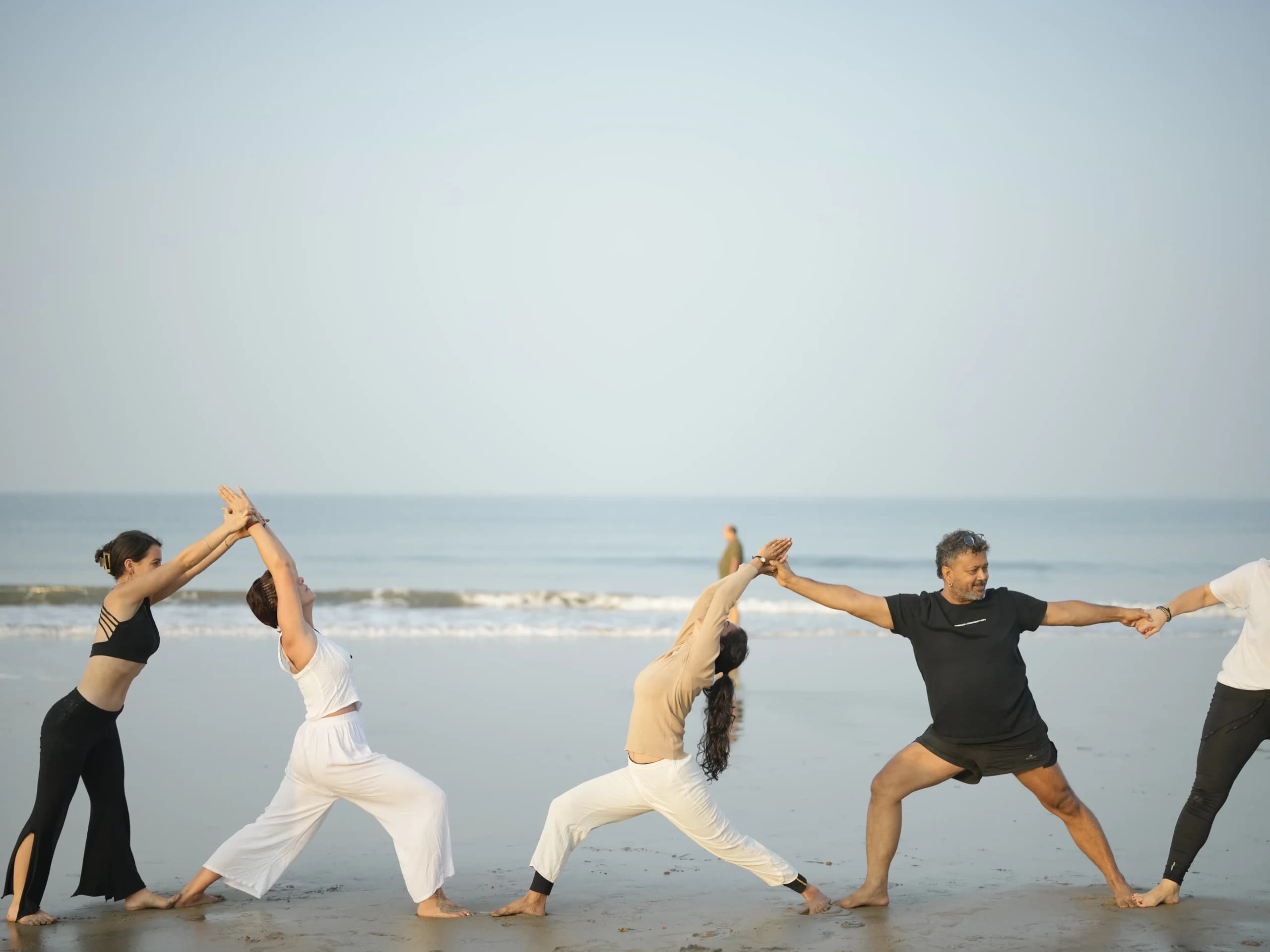
The fastest way to feel the difference proper alignment makes is to practise with hands-on guidance. Our daily drop-in classes in Arambol, Goa and Bhagsu, Dharamshala run alignment-focused sessions most mornings — no booking needed, just show up in comfortable clothes.
Deepen Your Practice: 100 Hour Alignment Yoga Teacher Training
If poses like these have you curious about the deeper “why” behind alignment — not just the poses but the anatomy and adjustments that make them safe — our 100 Hour Alignment Yoga Teacher Training in Goa teaches exactly this approach over 12 days, alignment-led and beginner-friendly from day one. It is also offered as a 100 Hour Multi-Style course in Dharamshala — see dates and fees for both campuses.
Practice With Proper Alignment
Come to a Class or Start Your Training
Drop in for a single class, or commit to 12 days that will change how every pose feels — both start with an alignment-first approach.
Written by
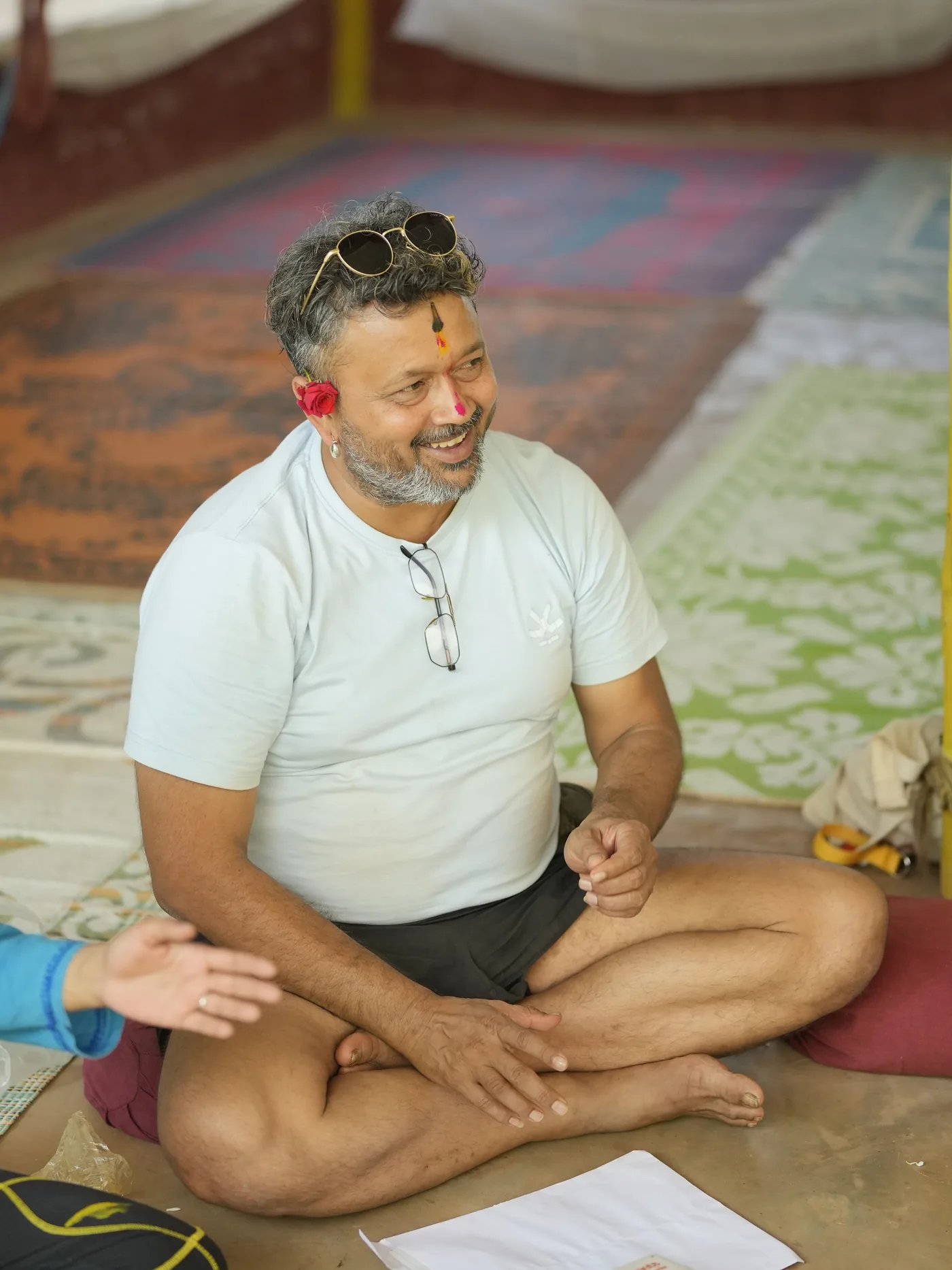
Alpesh Patwari
Founder of Alpesh Yoga. Introduced to yoga as a child, Alpesh managed epilepsy through breathing practices learned from Jain monks, and has taught traditional, alignment-based yoga to students from around the world for over two decades.
Meet our teachers →Frequently Asked Questions
2–3 times a week is a good starting rhythm, always after a warm-up like Cat-Cow. Daily practice is fine once your body is used to backbends, but give yourself at least one rest day if you notice lower-back fatigue.
Yes — regularly stretching the chest and strengthening the upper back directly counters the forward-rounded posture that comes from sitting and screen time. Most students notice easier, fuller breathing within a few weeks of consistent practice.
Gentle heart-openers like Cat-Cow, Puppy Pose and supported Bridge are usually fine and can even help. Deeper backbends like full Camel are best avoided or heavily modified until pain resolves — check with a doctor or physical therapist if pain is ongoing.
No, but a yoga block and a bolster (or a firm cushion and folded blanket) make several of these poses more accessible and comfortable, especially Bridge, Camel and Fish. We provide all props in every class and course.
More from the blog
Ready to Experience It for Yourself?
Join a course or retreat at Arambol Beach, Goa or Bhagsu, Dharamshala — or message us on WhatsApp if you have questions first.