Meditation
5 Simple Meditation Techniques for Beginners (2026 Guide)
Most people give up on meditation in the first week for the same reason: they sit down expecting a blank, silent mind, it does not happen, and they decide they are “bad at it.” You are not. Meditation is a skill built from specific techniques, the same way asana is built from specific poses — and some techniques suit a racing mind far better than simply “sitting and trying not to think.” Here are five real ones, taught in the order we introduce them to complete beginners on our 5 Day Pranayama & Meditation Course.
Quick answer: the 5 best meditation techniques for beginners
Guided meditation, mantra (japa), Yoga Nidra, chakra meditation and mindfulness (breath awareness) are the five best techniques for beginners. Start with guided meditation or a mantra if your mind races — both give your attention something to hold — then build a daily 5-minute habit before layering in pranayama for faster results.
Swipe to see all columns
| Technique | Best for | Start tonight in |
|---|---|---|
| Guided Meditation | Total beginners, a racing mind | 10 minutes |
| Mantra Meditation (Japa) | A busy mind that needs an anchor | 5 minutes |
| Yoga Nidra | Deep rest, mental fatigue | 15–20 minutes |
| Chakra Meditation | A clear, structured practice to follow | ~7 minutes |
| Mindfulness (Breath Awareness) | Building the core, transferable skill | 5 minutes |
1. Guided Meditation
This is the easiest place to start, and the one we recommend to almost every first-timer. A teacher’s voice walks you through what to notice — your breath, the weight of your body, the sounds around you — so your mind has something to follow instead of drifting. There is no wrong way to do it: when you notice your attention has wandered, you simply come back to the voice.
How to start tonight: sit or lie down somewhere quiet, close your eyes, and follow a 10-minute guided meditation without multitasking. Repeat at the same time each day for a week before deciding whether meditation “works for you” — the skill builds with repetition, not with the first attempt.
2. Mantra Meditation (Japa)
Mantra meditation gives your mind a single repeated sound or phrase to rest on — silently or as a soft whisper — instead of chasing thoughts. It is one of the oldest techniques in the yogic tradition precisely because repetition is such an effective anchor for a busy mind. Many students find it easier than silent meditation because the mantra gives the mind a job to do.
How to start tonight: pick one simple sound (even “so-hum,” matched to your inhale and exhale, works well for beginners) and repeat it silently for 5 minutes, letting the repetition slow down naturally.
3. Yoga Nidra (Yogic Sleep)
Yoga Nidra is a guided, lying-down meditation that moves your awareness systematically through the body while you stay on the edge between waking and sleep. It is one of the most restorative techniques we teach, and one of the few that works even when your mind feels too tired or scattered for seated meditation.
How to start tonight: lie flat on your back with your arms relaxed by your sides, and follow a Yoga Nidra recording for 15–20 minutes. It is completely normal to fall asleep the first few times — your body is telling you it needed the rest.
4. Chakra Meditation
Chakra meditation brings your attention to the body’s seven energy centres, one at a time, from the base of the spine to the crown of the head. Beyond the philosophy, it is a genuinely useful beginner technique because it gives you a clear, structured path to follow rather than an open-ended instruction to “just meditate” — each chakra is a specific point to rest your attention on before moving to the next.
How to start tonight: sit comfortably, close your eyes, and spend roughly one minute resting your attention at each of the seven points up the spine, noticing sensation without forcing anything.
5. Mindfulness Meditation (Breath Awareness)
The simplest technique of all, and the foundation every other one builds on: sit quietly and follow your natural breath without changing it, noticing when your mind wanders and gently returning your attention each time. It sounds almost too simple to matter — but the repeated act of noticing and returning is the actual exercise, and it is the single most transferable meditation skill you can learn.
How to start tonight: set a timer for 5 minutes, breathe normally, and count each exhale from one to ten, restarting at one whenever you lose count.
A Quick Rule of Thumb
If your mind is racing, start with guided meditation or a mantra — they give your attention something to hold. If you are already fairly calm and just want depth, breath awareness or chakra meditation will take you further.
How to Build a Daily Meditation Habit
- Same time, same spot. Consistency matters more than duration — 5 focused minutes every morning beats 30 minutes once a week.
- Pick one technique for two weeks before switching. Sampling five techniques in five days tells you nothing about what actually works for you.
- Track it simply. A tick on a calendar is enough motivation for most people to keep the streak going.
- Pair it with breathwork. A few minutes of pranayama before you sit calms the nervous system and makes the meditation itself easier.
Combine Meditation with Pranayama for Faster Results
On their own, these five techniques will genuinely change how your mind feels within a few weeks. Paired with proper pranayama — controlled breathing practices like Anulom Vilom and Bhramari — the effect compounds, because breath and mind regulate each other directly. That combination is exactly what we teach, technique by technique, over five focused days on our 5 Day Pranayama & Meditation Course at Arambol Beach and Bhagsu.
Learn to Teach Meditation: Our 200 Hour Yoga Teacher Training
If meditation has genuinely changed something for you, our 200 Hour Yoga Teacher Training goes a full step further — daily guided meditation, mantra chanting and Yoga Nidra are built into the curriculum alongside Hatha Alignment, Hatha Vinyasa Flow, pranayama and philosophy, so you leave able to teach these techniques, not just practise them. It is offered at both Arambol Beach, Goa and Bhagsu, Dharamshala — see current dates and fees for both campuses.
Learn It In Person
Meditate With Us at Arambol Beach or Bhagsu
Join a 5-day pranayama & meditation course, or come to a drop-in class — no experience required.
Written by
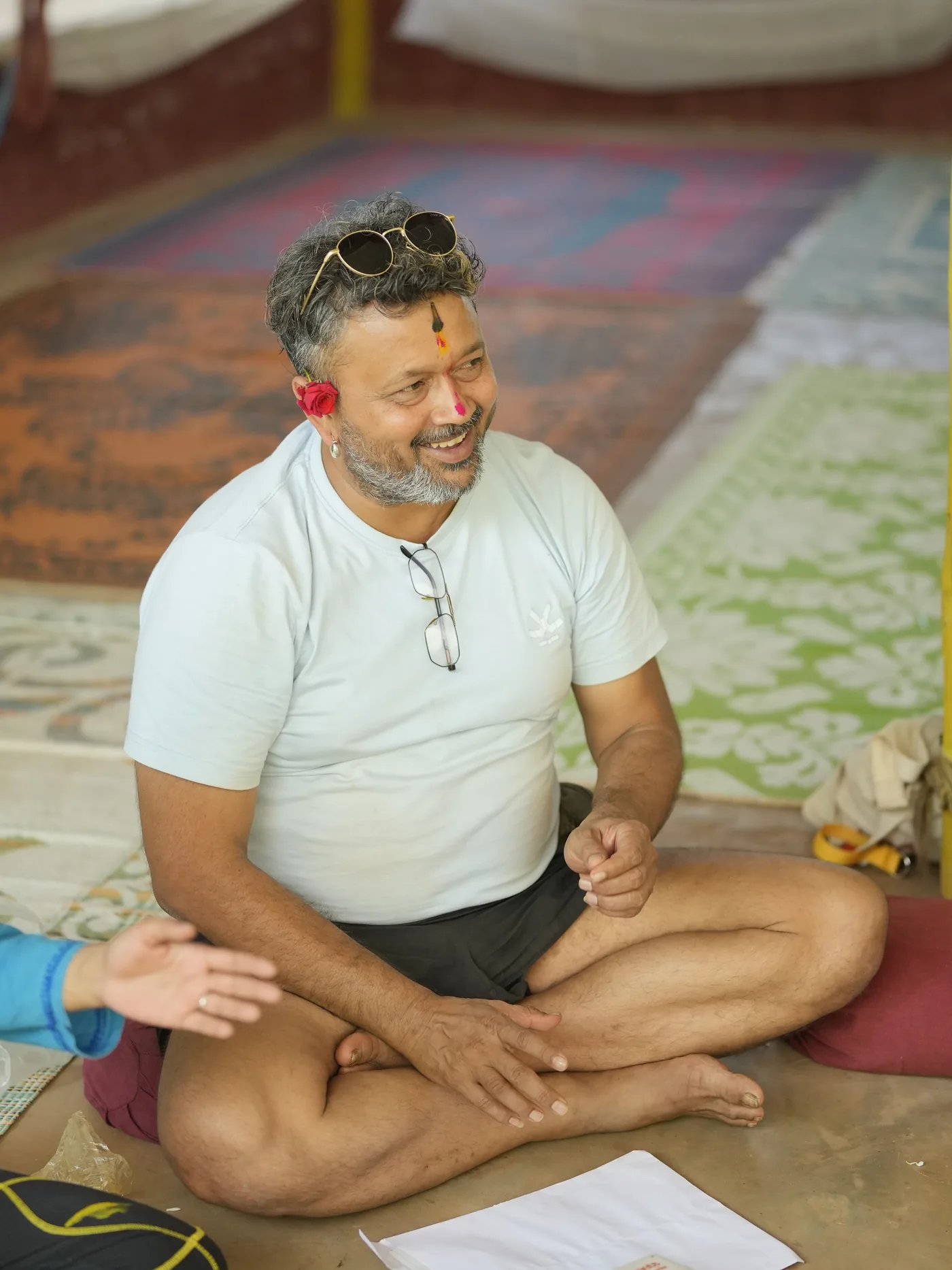
Alpesh Patwari
Founder of Alpesh Yoga. Introduced to yoga as a child, Alpesh managed epilepsy through breathing practices learned from Jain monks, and has taught traditional, alignment-based yoga to students from around the world for over two decades.
Meet our teachers →Frequently Asked Questions
Start with 5 minutes a day. It is genuinely better to meditate for 5 focused minutes every single day than to attempt 30 minutes once and give up. Most beginners naturally extend the time once the habit sticks, usually after 2–3 weeks.
Guided meditation is the easiest starting point because a teacher’s voice gives your attention something concrete to follow. Mantra meditation is a close second for the same reason — both work well for a busy or anxious mind.
During Yoga Nidra, yes — it is common and not a failure; your body is telling you it needs rest. During seated techniques like mindfulness or mantra meditation, dozing off usually just means you are tired or practising at the wrong time of day — try mornings instead.
No. A quiet spot, a cushion or chair, and 5–10 minutes are enough. Some students find a timer or a guided recording helpful when starting out, but neither is required.
More from the blog
Ready to Experience It for Yourself?
Join a course or retreat at Arambol Beach, Goa or Bhagsu, Dharamshala — or message us on WhatsApp if you have questions first.